- 0
- 677 words
Accurate data is essential for effective business operations. From customer records and financial information to inventory management and reporting, organizations depend on reliable data to make informed decisions. However, even small data entry mistakes can lead to significant operational challenges, financial losses, and customer dissatisfaction.
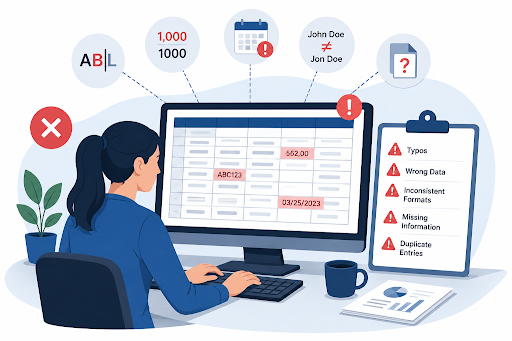
Understanding the most common data entry errors and how to prevent them can help businesses maintain high-quality information and reduce unnecessary risks.
Why Data Accuracy Matters
Data serves as the foundation for many business processes. Sales teams rely on customer information, marketing departments use data for targeting campaigns, and management depends on reports to guide strategic decisions.
When inaccurate data enters a system, it can affect multiple departments and create long-term problems. Maintaining high data quality helps businesses operate more efficiently and make better decisions.
Duplicate Records
One of the most common data entry mistakes is the creation of duplicate records. Duplicate entries can occur when information is entered multiple times or when databases lack proper validation processes.
Duplicate records can lead to:
- Confusing customer information
- Inaccurate reporting
- Wasted marketing efforts
- Reduced CRM efficiency
Regular database audits and data validation procedures help minimize duplication issues.
Incorrect Customer Information
Misspelled names, incorrect phone numbers, and invalid email addresses can negatively impact customer communication and service delivery.
When customer records contain inaccurate information, businesses may experience:
- Failed marketing campaigns
- Missed sales opportunities
- Poor customer experiences
- Reduced customer retention
Verifying information before entry can significantly improve data quality.
Inconsistent Data Formatting
Inconsistencies in data formatting often create challenges when managing large databases. Differences in date formats, address structures, abbreviations, and naming conventions can make information difficult to organize and analyze.
Establishing standardized data entry guidelines helps ensure consistency across all records.
Missing Data Fields
Incomplete records can limit the usefulness of business information. Missing contact details, customer preferences, or transaction history can affect reporting accuracy and operational efficiency.
Businesses should implement required fields and review processes to ensure critical information is captured consistently.
Manual Entry Errors
Human error remains one of the most common causes of poor data quality. Typographical mistakes, misplaced information, and incorrect values can occur when employees manually enter large amounts of data.
Examples include:
- Transposed numbers
- Incorrect product codes
- Wrong pricing information
- Data entered into the wrong fields
Quality control procedures and regular audits can help identify and correct these mistakes before they affect business operations.
Failing to Update Records
Customer information changes over time. Businesses that fail to update records regularly may rely on outdated data that no longer reflects current circumstances.
Outdated information can impact:
- Customer communication
- Sales activities
- Marketing campaigns
- Business reporting
Routine database maintenance helps keep records accurate and relevant.
Weak Data Validation Processes
Without proper validation procedures, inaccurate information can enter databases and remain unnoticed for long periods. Data validation helps identify errors, inconsistencies, and incomplete records before they create larger issues.
Effective validation processes improve overall data quality and support better decision-making.
Business Risks Associated with Poor Data Quality
Data entry mistakes can create several risks for businesses, including:
- Reduced operational efficiency
- Poor customer experiences
- Inaccurate financial reporting
- Compliance concerns
- Lost revenue opportunities
- Ineffective marketing campaigns
The cost of correcting errors often exceeds the effort required to prevent them in the first place.
How Professional Data Entry Services Help
Many organizations use professional Data Entry Services to improve data accuracy and reduce the risk of costly mistakes. Experienced data entry specialists follow structured processes, validation procedures, and quality control measures to ensure information is entered correctly and consistently.
Professional support helps businesses maintain organized databases, improve reporting accuracy, and reduce administrative burdens.
Conclusion
Data quality plays a critical role in business success. Common mistakes such as duplicate records, incorrect customer information, inconsistent formatting, and incomplete entries can negatively impact operations and decision-making.
By implementing strong data management practices and leveraging professional Data Entry Services, businesses can maintain accurate records, reduce risks, and create a reliable foundation for growth and operational efficiency.
Author

Primestarfirm@gmail.com
Related Posts

Charlize Theron’s Family: Inside the Lives of Her Children Jackson and August
- 0
- 708 words
Charlize Theron, a celebrated Hollywood actress known for her versatile roles and striking performances, is also a devoted mother to her two...
Read out all
Exploring Olivia Rodrigo’s Past Relationship: A Deep Dive into Her Ex-Boyfriend and Its Impact on Her Music
- 0
- 773 words
Olivia Rodrigo burst onto the music scene with a voice that captures the raw emotions of love and heartbreak. Her debut album,...
Read out all
Olivia Rodrigo Boyfriend: Unveiling the Details of Her Romantic Life
- 0
- 687 words
Olivia Rodrigo, the chart-topping singer-songwriter, has captured the hearts of millions with her music and relatable lyrics. As fans immerse themselves in...
Read out all
Does Peyton Manning Have Kids? A Peek Into His Family Life
- 0
- 741 words
Peyton Manning, a name synonymous with NFL greatness, often piques public curiosity about his personal life just as much as his legendary...
Read out all
Peyton Manning’s Kids: A Closer Look at Their Lives and Legacy
- 0
- 793 words
Peyton Manning is not only a legendary NFL quarterback, but he is also a devoted family man. Fans of the Indianapolis Colts...
Read out all
Mandal Parishad School Food Poisoning: A Comprehensive Analysis
- 0
- 898 words
Introduction In a recent alarming incident, several students at a Mandal Parishad School fell ill due to food poisoning, sparking widespread concern...
Read out all